Showing posts with label Academic. Show all posts

Wednesday, April 29

Human Autopsy


A couple of days ago, I finally went to assist to a human autopsy. It was something I had been wanting to see for quite some time and never really got around to do. My main interest was strictly academic. I am one of those who learns from experience. Nevertheless, I also went I guess you could say to "test myself", to get a proof on my real predisposition and attitude for the medical profession. Having been preparing myself for any possible (and very understanding) shock or insufference, I was totally surprised to see how incredibly well I took the whole thing. I was impassive,couragious, strong and, dare I say, excited somewhat like a little girl in a candy shop.. (I truly hope you won't judge this harshly as it is a mere representation of my profound passion for medical sciences). On the way home I started to elaborate what had actually happened: the 65, male, cancer patient suddenly became a father, friend, employee, neighbour. His body may have been torn apart on a slab, but the memory of who he had been still remained. Who was he? What had he been up to his whole life? It made me think of the "Everyman" morality play from the XV century when Death comes knocking on the Everyman's door and he has to figure out, before he hits the grave, what really mattered in life. Beauty vanishes. So do Discretion and, obviously, Strength. A man's strength had definitively left his body and I couldn't help but wander what had he actually left behind,but more personally if I will actually take Knowledge and Good Deeds away with me to Heaven one day.. I'll sure try to do my best.

Thursday, March 13

Facticious

I have always considered Robin Williams to be a versatile and very talented actor. From Peter Pan to Patch Adams to Good Will Hunting, he has never failed my expectations. Tonight I am feeling a little sleepless, so I thought I'd kick in the good old blogging habit after watching yet another Robin William's movie, The Night Listener (2006). To be fair, I found it a rather predictable psychological thriller..yet another one based upon a successful American novel
( Armistead Maupin, "The Night Listener", 2000), a roman
à clef as they call it. Robin Williams was intriguing in his I believe first role as an older gay writer. Gray intellectual beard, a bit of a belly, cord trousers and reading glasses look. Very intriguing,charming. The focal surprising twist towards the end is,however, not about the protagonist, but the undermining and unfathomable dualism of mental illness. Fascinating. I have always found the issue of mental illness interesting. Knowing how complex and perfect machines the human bodies are is one thing, but the ability of the mind it's quite a stunning concept. The issues highlighted by the movie can be related to a series of syndromes known as Factitious Disorders, when a person's mind is able to recreate the pathology of the illness they believe to be affected by or even arrive to the point of making illness up of their keens or even make up the people in their care. At first sight,these disorders could be assessed as blatant lies of unbalanced, shameless subjects. However, on a closer analysis it is easier to noticed that this is often the subconscious work of unhealthy people who, out of feeling unworthy of attention, recreate desperate situations, personages, "lies" which they believe will gain them more popularity. As many of you probably already know, I wrote my BA dissertation on the possible contribution of psychiatry and religion to the cure of mentally ill patients, with particular regard to schizophrenia. Despite the fact I was on the point of giving up on a number of occasions (here it's a recomandation to anyone undertaking an undergrad degree not to complicate your life with a difficoult topic for your first dissertation!!!), I thoroughly enjoyed the research and I was pleased with the end result. What stunned me the most is how mental disorders are nothing much more than the exasperation of human emotions which should make us all more symphatetic to those issues. Maybe none of us would have result to similar solutions as those highlighted by the movie (am trying real hard not to spoil the movie for you!) but who has never,not once felt unworthy of love to the point of being willing even to lie in order to feel better included? To undergo compromises. To lie. To exaggerate a story. To laugh at a rude joke. To cheat. Just for that priceless feeling of acceptance,belonging. If we think hard enough we are never too far from those we are judging and condemning.

Friday, August 31

Shattered.

Throughout my life, I have always had it in me to be a contestant, a rebel. Not necessarily 'burning my bra' in front of the masses, but always being inquisitive and, somehow, argumentative about various issues. I am of the kind of watches telly and argues-out-loud with the news reporter because he is 'talking bullshit' or vivaciously criticise the ref in an important football match I am not even at, responding on my mother's behalf when my sister is playing 'spoiled-brats' and similar.. When I was in senior high especially, I was rather obnoxious and arrogant. I even made my Faith an occasion for constant 'Bible Bashing' and verbalised debates. My all time favourite was biology, ethics and philosophy classes - best ones for open discussion. I even took it against Darwin, the Papacy and Sigmund Freud. In fact, the latter was a special target for mouthy me. I despised his theories, made his arguments a joke and bull-eyed his distressed personality. These days I like to refer to my past behaviour as 'teen-age arrogance'. As you all know one of my favourite topics is 'pantha rei', the issue of change. I feel I have changed. A lot. Having worked with troubled teens, children from disadvantaged backgrounds and people in general for quite sometime, I have grown to appreciate some more expert and wiser words from others, like Freud, for instance. One of his theories suggests that our adult behaviour is, to say the least, influenced by our upbringing. Don't get me wrong: my upbringing has been close to idyllic, perfect, dare I say. What bothers me the most right now is what my teachers said. Teachers, instructors, professors of life. I often reflect on whether most of the academic profession is totally in the wrong job. Frustrated, middle-aged, dissatisfied academics who take it onto their students through mental humiliation and lack of sufficient stimulation. My classical Greek lyceum professor, for instance, who seemed to find an incredible sense of satisfaction in humiliating me in front of my whole class by saying I would have never achieved anything in life, that I was a nobody, that I was mediocre. Isn't it weird how, at the eve of a decisive step in my life, those are the words that are resounding in my head. I not stupid, not smart; I am mediocre. I have often reflected on that woman's cruelty and often wondered whether she was a, pardon my French, b!*$%# or the only person who ever really saw right through me. I am shattered.

Friday, February 23

'Paese Che Vai, Gente Che Trovi'

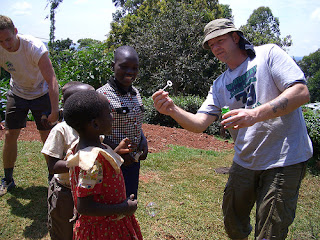
"Paese che vai, gente che trovi" is a traditional Italian saying which literally means "Places you go, people you find" - (bear with me, it does have a meaning after all!), and it refers to the now popular postmodern concept of 'global village' which undermines a common umanity in cosmopolitanism. The good old ancient Greeks, who, amongst many things, coniated the term "cosmopolitan" (literally, citizen of the world) had foreseen in the Hellenistic empire the ideal that a man could be at home anywhere in the known world. Imagine the scene. The Greek civilization had started off pretty small; first, it was Athens, then its prefecta in the boardering regions, then to Macedonia, the Balcans, northern Africa, the Middle East, Asia. There are conspiracies and archeological exhibits which prove that Alexander the Great reached out as far as India in his conquests..what a man!!!. Nonetheless, as soon as the so called Hellenistic era started (4th century BC),like under any period of prosperity and progress (es. the Enlightenment, the Industrial Revolution), there was a brewing of optimism, inventiveness and progress. They invented things, created philosophies and academic disciplines and were led to believe that the world was their oyster, that, as long as you spoke Greek, you could be anywhere and do whatever you liked. Too bad that this concept was only true if you could afford it. Greeks benefitted from inequitable priviledges at the expenses, like always, of the non-Greeks, the slaves and the thousands of local communities that had been nullified for the advantage of their own. Remarkably enough, studious of the time would tell you that, unlike many other colonizations, the Hellenistic empire favoured and integrated local identities. For instance, the raise of Christiandom in the first century AD is a direct offspring of the Greeks fashination and acceptance for foreign beliefs and customs. However, their acceptance was only on an intellectual level and only for what could,somehow, improve their lives. Kind or less refined, colonialism is always a venture for potential abuse. What was the point of the whole academic regurgitation,anyway?! Oh, yes. I am currently reading a book by 2004 Peace Nobel Prize winner, Wangari Maathai. "Unbowed" is a wispy yet direct autobiography, "a compelling tale about the challenges and triumphs of modern Africa, a universal story about courage, perseverance and success for a noble cause"(Bill Clinton). I am loving every word of it and being absolutely absorbed in the life of this extraordinary woman. I am especially appreciating the old African fables and the tales of a forgotten tradition. Also, I found of interest the way she perceives the British ruling in Kenya. Due to her mixed Western/African education, she is the best qualified person to speak about the issue and does it with immense grace, wisdom and balance. "Take the good, leave the bad, 'cause we are all bound by a common humanity" would be my take on cosmopolitanism. Being the aspirational globe trotter that I like to describe myself as, I have utterly enjoyed the discovery of alien cultures. In my quest for cultural full-immersion and integration, I have often debated the dangers of imposing my national identity over others. This does not merely restrict to watching the Olympic games or the football worldcup where I am suddenly and scarely transformed into a hooligan-Hulk-like yelling,beer drinking monster (my apologies to those who have had to watch these events with me). Many of you know that my ultimate ambition would be to work as a missionary doctor in developing countries and that I have been priviledged enough to do some umanitarian aid work in various parts of the world - and loved every minute of it. An example of this is this picture on the left: me and Rosie teaching songs in a primary school in Nanchuwa, Kisii, Kenya, where, allegedly, the pupils had never seen a white skinned person before and there, behold, the crazy Italian chick and the chatty Northern Irish girl dancing and singing like mad women..I indeed enjoyed myself, but I remember being very weary that night about potentially having imposed "my way" onto a foreign culture. But how do you do that? How do you pursuit healthy cross-cultural communication and exchange and stay away from the dangers of imperialism and imposition? "Places you go, people you find" - of course, but what makes a man is not merely his genes, but it's his beliefs, his history. As Maathai writes: "The way we were brought up and translate the life we see, perceive, smell and touch (the water we drink, the air we breathe and the food we eat) is what we are".